Last reviewed: 8 September 2026
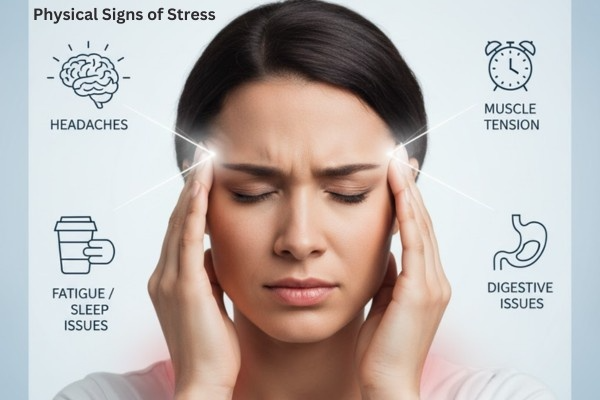
Physical signs of stress can include headaches, muscle tension, tiredness, sleep problems, stomach upset, nausea, dizziness, sweating and a faster or more noticeable heartbeat. Stress can cause real physical symptoms, but a new, severe or persistent symptom should not automatically be assumed to be caused by stress.
This guide explains what stress can feel like in your body, which symptoms are commonly reported, when something deserves medical attention, and what practical steps may help. If work is part of the problem, you will also find clear routes to Spark’s more detailed guides on burnout, sleep, workplace stress and employee support.
Physical Signs of Stress at a Glance
| Possible physical sign | What you might notice |
|---|---|
| Headaches | Pressure, aching or tension around the head |
| Muscle tension or pain | Tight shoulders, neck, back or other muscle aches |
| Jaw tension | Clenching your jaw or grinding your teeth |
| Tiredness | Feeling drained, low in energy or unusually fatigued |
| Sleep changes | Difficulty switching off, sleeping too little or sometimes too much |
| Stomach problems | Indigestion, discomfort, diarrhoea or constipation |
| Nausea or dizziness | Feeling sick, light-headed or faint |
| Faster heartbeat | Your heart may feel quicker or more noticeable than usual |
| Chest discomfort | Pain, tightness or discomfort can occur, but should not simply be assumed to be stress |
| Sweating | Feeling hot or sweating more when under pressure |
| Skin changes | Some people notice itching, rashes or worsening of existing skin problems |
| Appetite or sexual changes | Eating differently or experiencing changes in sexual wellbeing |
Important: these symptoms are not proof that stress is the cause. Many can occur for other reasons. If you are worried about a symptom, it is sensible to seek appropriate medical advice rather than diagnosing yourself from a list.
In This Guide
- What does stress feel like physically?
- 12 common physical symptoms of stress
- Can stress symptoms feel like another health problem?
- Physical, emotional and behavioural signs
- 60-second stress check-in
- Work-related stress and physical symptoms
- What can you do when stress affects your body?
- When should you speak to a GP?
- Frequently asked questions
What Does Stress Feel Like Physically?
Stress is not only something you experience in your thoughts. Your body can respond to pressure too.
When you feel threatened, worried or under pressure, your body releases stress hormones such as adrenaline and cortisol. This response can temporarily increase your heart rate, make you sweat more and leave your muscles feeling tense.
In the short term, that response can be useful. It helps your body react quickly to something demanding.
The problem is that modern pressure does not always have a clear beginning and end. A difficult workload, financial worry, caring responsibilities, relationship problems or ongoing uncertainty can leave someone feeling under pressure for much longer.
Over time, you may start noticing physical changes before you fully recognise how stressed you have become.
12 Common Physical Symptoms of Stress
Stress affects people differently. You may experience several of these symptoms, only one of them, or symptoms that are not listed here.
1. Headaches and dizziness
Headaches are one of the physical symptoms commonly associated with stress. Some people also report feeling dizzy or light-headed during periods of pressure.
Stress may be part of the picture, particularly if symptoms appear during demanding periods, but headaches and dizziness have many possible causes. Frequent, severe or unexplained symptoms deserve medical advice.
2. Muscle tension and body aches
You may notice that your shoulders are raised, your neck feels tight or your back aches after a stressful day.
Muscle tension can build gradually. You may not realise how tightly you have been holding your body until you stop working or finally sit down at the end of the day.
3. Jaw clenching or facial tension
Some people clench their jaw or grind their teeth when they are under pressure. This may happen during the day without you noticing, or during sleep.
A useful first step is simply noticing when the tension appears rather than repeatedly telling yourself to “relax”.
4. Tiredness and low energy
Stress can be tiring. Constant worry, poor sleep and feeling mentally switched on for long periods can leave you feeling drained.
However, persistent fatigue has many possible causes. Do not assume ongoing or severe tiredness is stress-related simply because you have also been busy or worried.
5. Sleep problems
Stress can make it harder to switch off at night. You might replay conversations, think through tomorrow’s workload, wake during the night or find yourself checking the time while worrying about how little sleep is left.
Poor sleep can then make the next day harder, leaving concentration, mood and energy more difficult to manage.
6. Stomach and digestive problems
Stress can be accompanied by stomach discomfort or digestive changes. NHS and Mind guidance include symptoms such as stomach problems, indigestion, heartburn, constipation and diarrhoea among possible physical effects of stress.
Recurring digestive symptoms should still be discussed with a healthcare professional when appropriate, particularly if they are new or changing.
7. Feeling sick, dizzy or faint
Some people feel nauseous, dizzy or faint when under intense pressure. These feelings can be unsettling and may make the situation itself feel more frightening.
Because these symptoms can also occur with other health problems, seek medical advice if they are severe, persistent or concerning.
8. A faster or more noticeable heartbeat
Stress hormones can increase your heart rate, so you may become more aware of your heartbeat when anxious, frightened or under pressure.
A racing, pounding, fluttering or irregular-feeling heartbeat can also have other causes. If palpitations keep happening, last a long time, are getting worse or concern you, speak to an appropriate healthcare professional.
9. Chest discomfort
Chest pain or discomfort can occur during periods of stress or anxiety. But this is one symptom that should never simply be written off as stress.
The same symptom can occur with serious medical conditions, so pay attention to how it feels and seek urgent help where necessary. The emergency guidance below explains when to call 999.
10. Sweating or feeling unusually hot
You may notice increased sweating during an intense meeting, difficult conversation, presentation or other stressful situation.
This can be part of the body’s immediate stress response.
11. Skin reactions
Mind lists rashes and itchy skin among physical changes that some people report during stress. Existing physical health problems can also feel more difficult to manage during prolonged periods of pressure.
Skin symptoms can have many causes, so recurring or unexplained changes should not be assumed to be stress without appropriate advice.
12. Changes in appetite or sexual wellbeing
Stress can affect everyday habits and physical wellbeing in less obvious ways too. Some people eat more or less than usual, while others notice changes in sexual interest or functioning.
Mind also notes that some people experience changes to their menstrual cycle during periods of stress.
Where Does This Sound Most Like You?
Recognising a symptom is useful, but the next question is usually what is driving it. Choose the route that best matches what you are experiencing.
Work is leaving me exhausted
If tiredness is becoming persistent and you are also feeling detached from work, cynical or unable to recover properly, explore the difference between stress and burnout.
Read: Signs of Burnout at Work
Stress is affecting my sleep
If your mind stays busy after the working day ends, our sleep guide explains the relationship between stress, rest and healthier work-life boundaries.
Read: World Sleep Day & Better Sleep Guide
I need something practical during the working day
If you are looking for short techniques rather than another long list of advice, explore simple ways to create small pauses during a busy day.
Read: How to Practise Mindfulness at Work
Can Physical Stress Symptoms Feel Like Another Health Problem?
Yes. This is why it is important not to diagnose yourself from a list of stress symptoms.
Stress can cause genuine physical changes, but many of the same symptoms can occur for unrelated reasons.
| Symptom | Why you should not automatically assume stress |
|---|---|
| Persistent tiredness | Fatigue can be associated with stress and poor sleep, but it can also have many other physical or mental health causes. |
| Headaches | Tension and stress may contribute, but recurring or severe headaches deserve appropriate assessment. |
| Stomach problems | Stress can affect digestion, but new, persistent or changing digestive symptoms should not simply be dismissed. |
| Palpitations | Stress can make your heartbeat faster or more noticeable, but palpitations can have other causes too. |
| Chest pain | Stress or anxiety can sometimes be associated with chest symptoms, but serious heart and other medical conditions can cause similar symptoms. |
A useful rule is simple: if a symptom is new, severe, persistent, worsening or worrying you, seek appropriate medical advice instead of deciding that stress must be the cause.
Do Not Automatically Assume Chest Pain Is Stress
Chest pain can have many causes and some require urgent treatment.
Call 999 for emergency help if you have sudden chest pain or discomfort that does not go away, particularly if it:
- feels like pressure, tightness, heaviness or squeezing;
- spreads to your arm or arms, neck, jaw, back or stomach;
- comes with severe difficulty breathing;
- comes with sweating, feeling sick or being sick;
- comes with marked light-headedness; or
- makes you think you may be having a heart attack.
If you are unsure whether you need emergency help, NHS 111 can advise on urgent health concerns that are not immediately life-threatening.
Physical, Emotional and Behavioural Signs of Stress
Stress rarely fits neatly into one category. Physical changes may appear alongside changes in how you think, feel or behave.
| Physical | Emotional or mental | Behavioural |
|---|---|---|
| Headaches | Feeling overwhelmed | Sleeping differently |
| Muscle tension | Worrying repeatedly | Eating more or less |
| Stomach problems | Difficulty concentrating | Avoiding people or situations |
| Tiredness | Irritability | Drinking or smoking more |
| Faster heartbeat | Difficulty making decisions | Becoming more withdrawn |
You do not need to experience all of these signs to be under stress. Equally, experiencing one does not prove that stress is the cause.
Is Stress Showing Up in Your Body? A 60-Second Check-In
This is not a medical test and cannot diagnose stress. It is simply a way to pause and notice patterns that may otherwise be easy to overlook.
Body
- Where am I carrying tension right now?
- Have headaches, stomach symptoms or physical discomfort become more noticeable?
Energy
- Am I more tired than usual?
- Do I recover after rest, or still feel drained?
Sleep
- Has my sleep changed?
- Do I lie awake thinking about tomorrow or replaying the day?
Work
- Do I still feel mentally “at work” long after my working day has ended?
- Are symptoms more noticeable before, during or after work?
Behaviour
- Am I eating, drinking, smoking or socialising differently?
- Am I avoiding things I would normally manage?
Duration
- Is this a short difficult period, or has it become my normal?
- Are symptoms continuing even when the immediate pressure has eased?
Try this check-in again in a week. If symptoms are persisting, worsening or concerning you, consider discussing them with a healthcare professional.
Work-Related Stress and Physical Symptoms
Work is one of many possible sources of stress. Deadlines, excessive workload, unclear expectations, difficult relationships, organisational change or feeling that you have little control can all contribute to pressure.
The Health and Safety Executive identifies six areas of work design that organisations should manage properly:
- Demands – including workload and working patterns;
- Control – how much say people have in the way they work;
- Support – from managers, colleagues and the organisation;
- Relationships – including conflict and unacceptable behaviour;
- Role – whether people understand what is expected of them; and
- Change – how organisational change is managed and communicated.
If your physical symptoms regularly become more noticeable during periods of work pressure, it may be worth looking at both sides of the problem: how you are feeling and what is happening in the working environment.
Taking another evening to “be more resilient” is unlikely to solve an unrealistic workload, unclear responsibilities or a culture where people feel permanently available.
When Stress Starts Affecting Your Ability to Work
Stress can reach a point where concentration, sleep, energy or physical symptoms make working much more difficult.
Depending on the circumstances, useful next steps may include speaking with your GP, discussing workload with your manager, using an Employee Assistance Programme if one is available, or asking whether occupational health support would be appropriate.
Some people may also need time away from work. Fit-note and sickness-absence rules are a separate subject, so rather than repeating them here, see our detailed UK guide:
How Long Can You Be Signed Off With Stress in the UK?
What Can You Do When Stress Is Affecting Your Body?
There is no single technique that removes every source of stress. Start with the part of the situation that is actually within your control.
1. Notice what tends to happen before the symptoms
Instead of only noticing a headache at 6pm, think about the hours before it. Were you working without a break? Was there a difficult conversation? Had you missed lunch? Were you rushing between tasks?
Patterns can be more useful than trying to analyse one isolated symptom.
2. Give yourself genuine recovery time
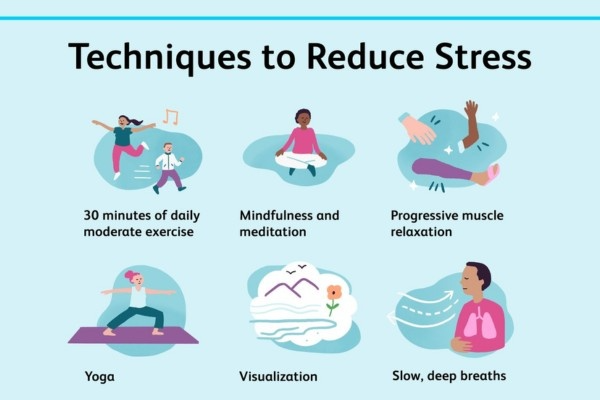
Recovery does not always mean doing nothing. It may mean stepping away from work, spending time outside, moving your body, seeing someone you trust or doing something that does not require you to perform.
3. Protect your sleep where possible
Try to create some separation between work and bedtime. If your mind is full of unfinished tasks, writing tomorrow’s priorities down can be more useful than repeatedly rehearsing them in your head.
4. Take proper breaks during the working day
A break is not simply answering email while eating lunch. Short periods away from the screen or task can create a useful reset during a demanding day.
5. Keep some regular movement in your routine
Movement can support general physical and mental wellbeing. It does not need to mean an intense workout. A walk, stretching or ordinary daily movement may be more realistic during a difficult period.
6. Talk about the pressure, not only the symptoms
If work is contributing, telling a manager that you have headaches without discussing an unmanageable workload may leave the cause untouched.
Where it feels safe and appropriate, explain what part of the situation is becoming difficult and what practical support might help.
7. Reduce unnecessary after-hours work
A two-minute email can reopen the working day mentally. Where your role allows it, create a clearer point at which non-urgent work waits until tomorrow.
8. Get professional support when you need it
Self-care has limits. If symptoms are persistent, worsening, difficult to manage or making everyday life hard, seek appropriate professional advice.
When Should You Speak to a GP About Physical Stress Symptoms?
Consider speaking with your GP or another appropriate healthcare professional if:
- physical symptoms are persistent;
- they are getting worse;
- they are affecting work, sleep or ordinary daily activities;
- you are finding it difficult to cope with stress;
- you are not sure whether stress is actually the cause; or
- a particular symptom is worrying you.
Seeking advice does not mean you are overreacting. It allows other possible causes to be considered rather than assuming that everything is stress-related.
You can also read the NHS guidance on stress and getting help .
Stress Is Affecting More Than How You Feel — What Next?
The right next step depends on your situation.
If you are looking for support as an employee
Understand the different UK workplace support options, including EAPs, occupational health, manager support and other mental health resources.
Explore Employee Mental Health Resources in the UK
If you manage people or lead HR
Individual coping strategies matter, but employers also need to address workload, management practices, access to support and the wider working environment.
Explore Spark’s Employee Wellbeing Guide for UK Employers
Frequently Asked Questions About the Physical Signs of Stress
What are the physical signs of stress?
Physical signs of stress can include headaches, dizziness, muscle tension or pain, tiredness, sleep problems, stomach problems, nausea, sweating, chest discomfort and a faster or more noticeable heartbeat. Symptoms vary between people and can also have causes unrelated to stress.
What physical symptoms can stress cause?
Stress can affect several parts of the body. Commonly reported symptoms include headaches, muscle aches, stomach problems, fatigue, sleep disturbance, dizziness, sweating and changes in heart rate. No single physical symptom proves that someone is stressed.
How does stress affect the body?
When you feel under pressure or threatened, the body releases stress hormones such as adrenaline and cortisol. These can temporarily change heart rate, sweating and muscle tension. Persistent stress can also affect sleep, habits and how well you feel day to day.
Can stress make you feel physically ill?
Yes. Stress can be accompanied by genuine physical symptoms, including nausea, headaches, digestive discomfort, fatigue and muscle tension. However, feeling physically unwell can have many causes, so persistent or concerning symptoms should be assessed appropriately.
Can stress cause tiredness?
Stress can contribute to tiredness, especially when worry, poor sleep or sustained pressure make it difficult to recover. Persistent fatigue also has many other possible causes, so do not automatically assume stress is responsible.
Can stress cause headaches and dizziness?
Headaches and dizziness are both listed by the NHS and mental health organisations among symptoms that can occur during stress. Frequent, severe or unexplained headaches or dizziness should still be discussed with a healthcare professional.
Can stress cause stomach problems?
Yes. Stress can be associated with digestive symptoms including stomach discomfort, indigestion, constipation or diarrhoea. Recurring or unexplained digestive symptoms can have other causes and may need medical advice.
Can stress cause chest pain or palpitations?
Stress or anxiety can sometimes be associated with chest discomfort and a faster or more noticeable heartbeat. However, chest pain and palpitations can also have other medical causes. Never assume significant chest pain is only stress, and call 999 where symptoms suggest a medical emergency.
How long do physical symptoms of stress last?
There is no single timetable. Symptoms may ease when a short-term source of pressure passes, while ongoing stress can continue to affect someone for longer. If physical symptoms persist, worsen or concern you, seek medical advice rather than waiting for a fixed number of days or weeks.
When should I see a doctor about stress symptoms?
Speak to a GP or another appropriate healthcare professional if symptoms are persistent, worsening, interfering with everyday life or making you concerned that something other than stress could be causing them. Call 999 for symptoms that may represent a life-threatening emergency.
The Main Thing to Remember
Stress can show up physically before you fully recognise how much pressure you are under. Headaches, tight muscles, poor sleep, stomach problems, fatigue or a noticeably faster heartbeat can all occur during stressful periods.
But recognising that connection should not become a reason to dismiss every symptom as “just stress”.
Notice patterns. Look at what is happening in your life and work. Give yourself opportunities to recover. Address sources of pressure where you can. And seek professional advice when symptoms are persistent, severe, changing or worrying you.
Understanding the physical signs of stress is useful not because it gives you a diagnosis, but because it can help you recognise when something needs attention.
Health information: This article provides general wellbeing information for a UK audience and is not a diagnosis or substitute for individual medical advice. Physical symptoms can have many causes. If you are concerned about your health, speak to an appropriate healthcare professional. Call 999 for a life-threatening emergency.
Sources and Further Reading
- NHS – Stress: symptoms, causes and getting help
- NHS Every Mind Matters – Dealing with stress
- Mind – Signs and symptoms of stress
- Health and Safety Executive – Work-related stress
- NHS – Heart attack symptoms and emergency guidance
Last factual review: 8 September 2026.